Lessons from the Hong Kong Fire: Why Halogen-Free Flame-Retardant Netting Matters
Halogenated retardants release corrosive gases and embrittle under UV. Halogen-free phosphorus–nitrogen systems char to suppress fire, with far less smoke.
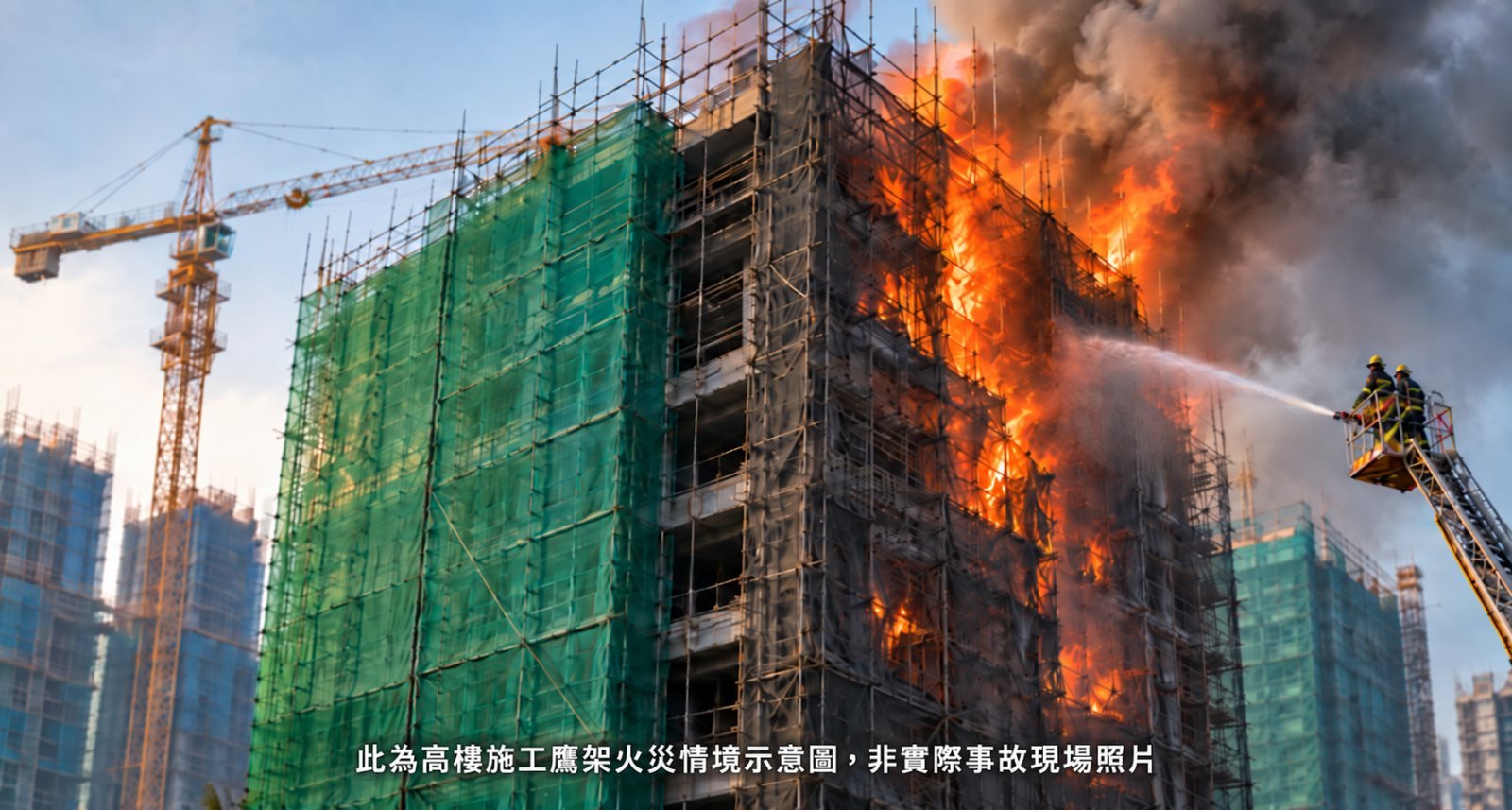
On 26 November 2025 a No. 5 alarm fire broke out at Wang Fuk Court in Tai Po, Hong Kong. It started at the facade fall-arrest netting and spread through seven residential blocks, killing 159 people — the worst fire in Hong Kong in half a century. It exposed the lethal risk of inadequate flame retardancy and drew worldwide attention. In dense cities, upgrading fire performance is urgent, above all for the netting routinely used in facade repair.
The problem with halogenated netting
Most flame-retardant fall-arrest netting on the market is HDPE-based and uses halogenated flame retardants; halogen-free alternatives are rare. Halogenated products improve flame retardancy in the short term but carry serious drawbacks: burning releases strongly corrosive gases such as hydrogen chloride and hydrogen bromide, which irritate the airways and can cause severe coughing, pulmonary oedema and chemical burns, and may generate carcinogenic dioxins associated with lung cancer, reproductive damage and neurodevelopmental harm. Even for survivors, chronic endocrine disruption and immune suppression can follow.
Worse, halogenated additives are vulnerable to prolonged UV exposure, accelerating polymer degradation: the material embrittles, loses mechanical strength (tensile strength falling to as little as 21% of the original) and fades, and service life drops sharply — to a matter of months or a few years. That raises replacement costs and magnifies fire risk, because aged netting breaks easily and can neither arrest falls nor slow flame spread. International research suggests such materials do not reduce mortality and may increase overall environmental and health risk through toxic smoke and poor durability.
How halogen-free netting differs
Halogen-free netting uses phosphorus–nitrogen or inorganic retardants that form a char layer and release water vapour to suppress combustion. It produces less smoke and lower toxicity, releasing mainly carbon dioxide and water vapour, with no halogenated corrosives or carcinogens. EU and US EPA reporting indicates smoke toxicity reduced by more than 30%, extending escape time and protecting both residents and firefighters. In a comparable event it slows spread and keeps escape routes usable — fire protection rather than added poison.
What ICHOU offers
With demand for fire-safe netting rising sharply, ICHOU was early to market with an advanced halogen-free flame-retardant fall-arrest net built on phosphorus–nitrogen chemistry. Its weathering performance resists sun exposure, preventing ageing and fading and extending service life; it withstands rain, heat, humidity and cold, staying stable year round; and it resists tearing and impact, suiting high-rise wind loads and accidental strikes on maintenance and scaffold work. Third-party testing confirms 50% lower smoke release and no toxic gas generation.