Feral Pigeons, Public Health and Why Bird Netting Works Best on Buildings
Urban pigeon numbers keep rising, and droppings and feathers raise public-health concerns. It pays to net a building before birds settle in, not after.
Pigeon flocks are a public-health concern, and bird management on buildings matters more than ever
Feral pigeon numbers in Taiwanese cities keep growing — in parks, on campuses, on apartment blocks and office towers alike. Recent press coverage notes that beyond the mess they create, pigeon droppings and feathers may carry a range of pathogens, putting public health back in the spotlight.
What problems do pigeon flocks cause?
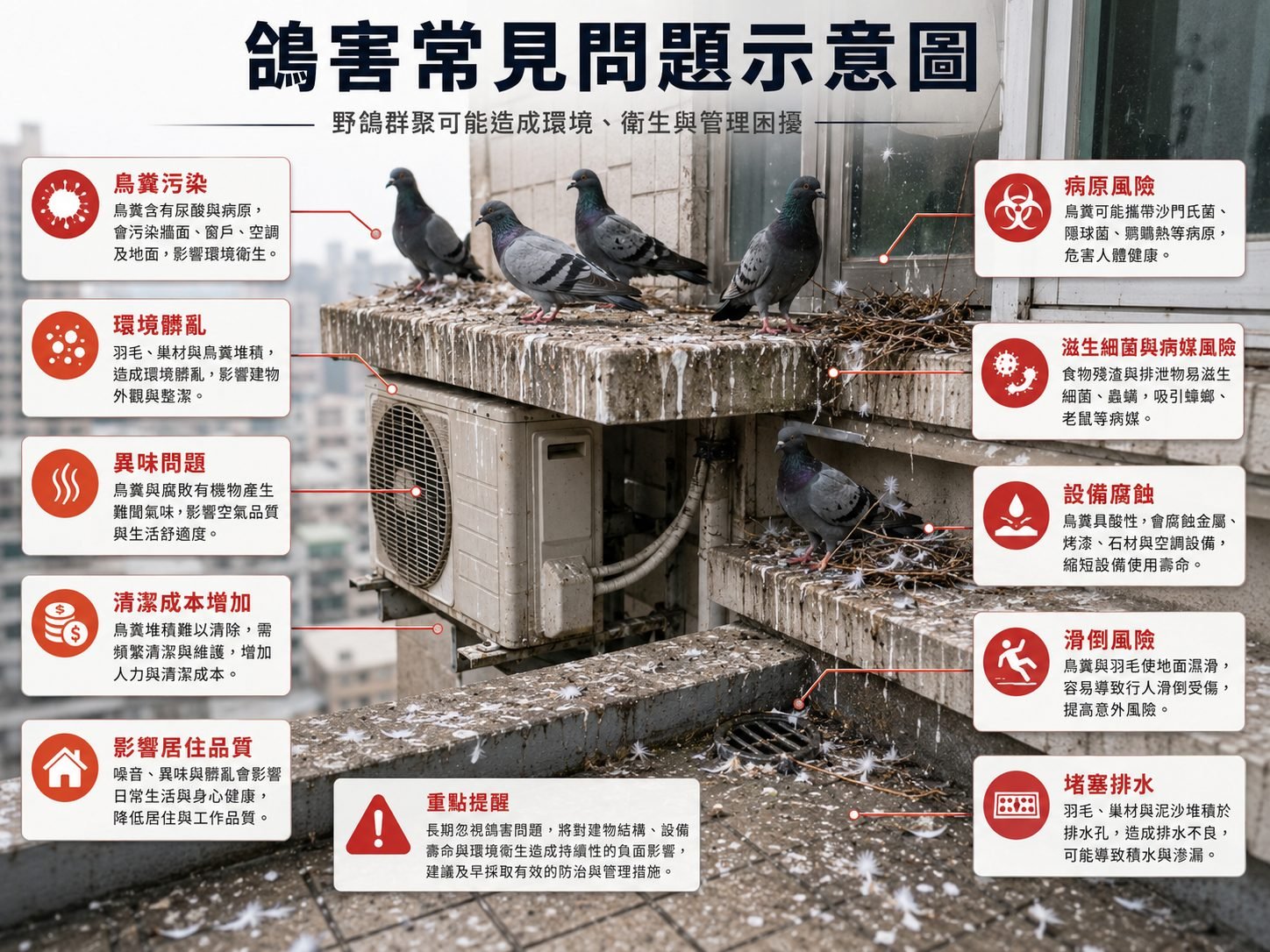
Reporting on the issue points to several recurring management problems:
- Facades, roofs, balconies and equipment fouled by droppings.
- Accumulated droppings driving up cleaning and maintenance costs.
- Blocked drainage outlets, gutters and plant.
- Feathers and droppings affecting environmental hygiene.
- Possible pathogens in droppings, so authorities advise against direct contact and recommend personal protection when cleaning.
For hospitals, schools, food plants, logistics centres, office towers and residential communities, reducing long-term roosting has become a real part of building maintenance.
Prevention beats clean-up
Many buildings only act once droppings have built up. But washing facades, removing droppings, repairing corroded equipment and disinfecting regularly all cost significant labour and money.
Putting suitable bird-control measures in place before pigeons establish a fixed roost is usually more efficient, and keeps later maintenance spend down.
Bird netting: protection and humane management
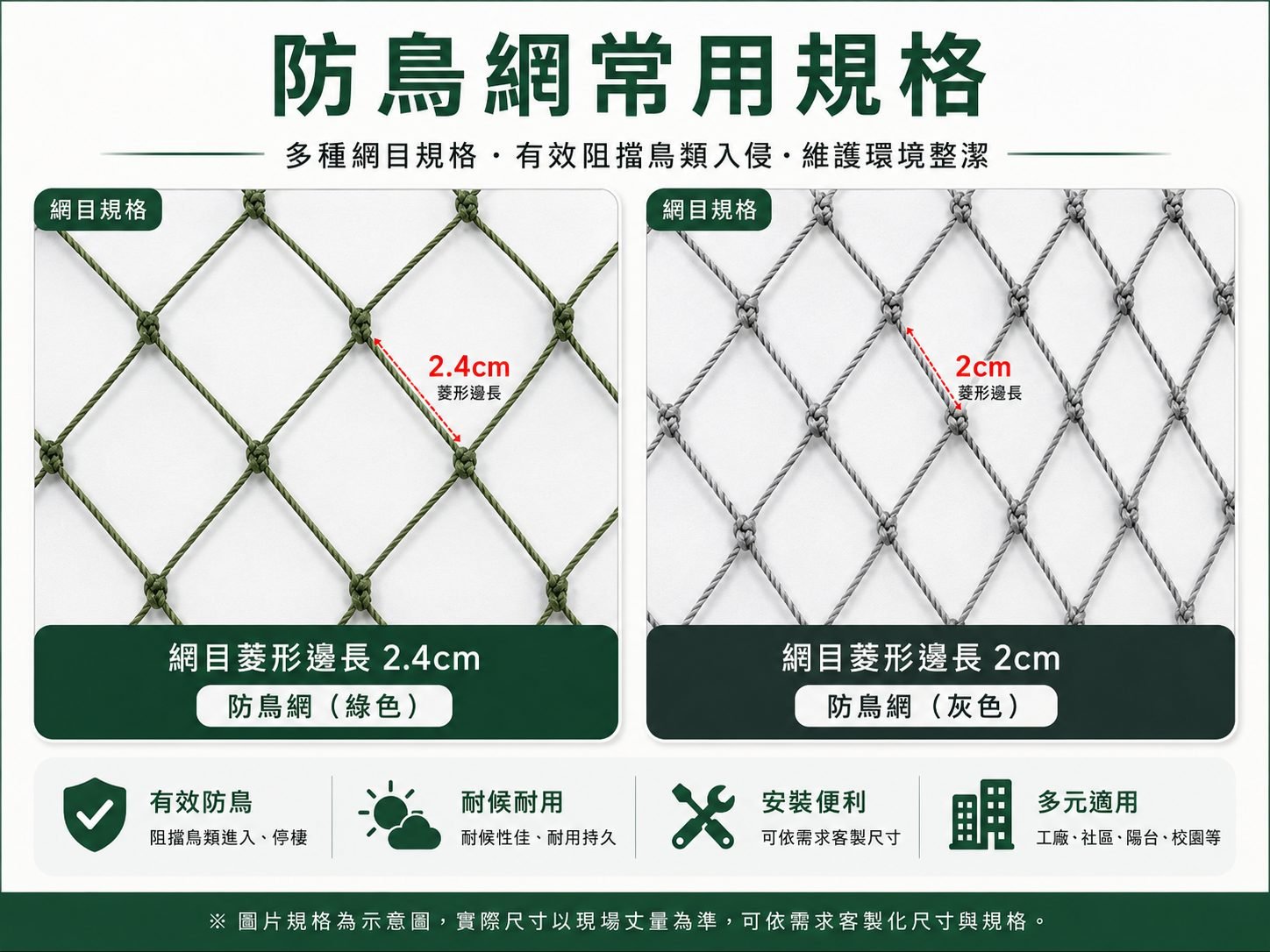
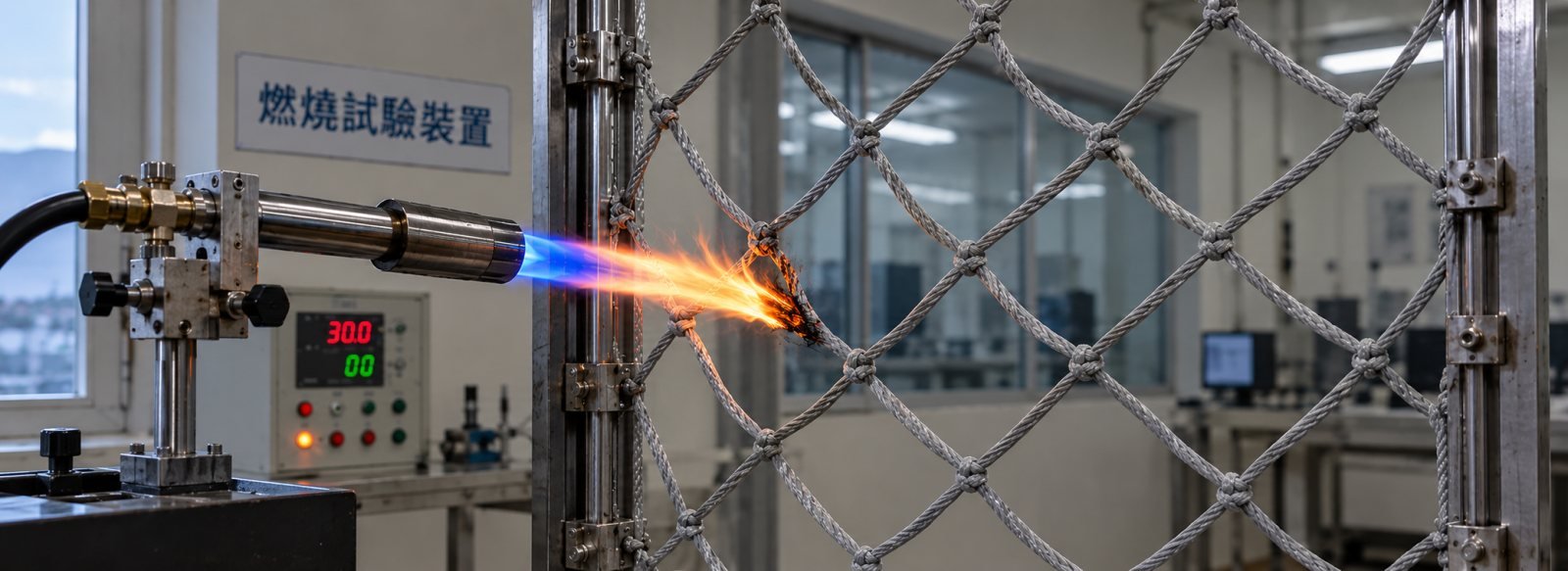
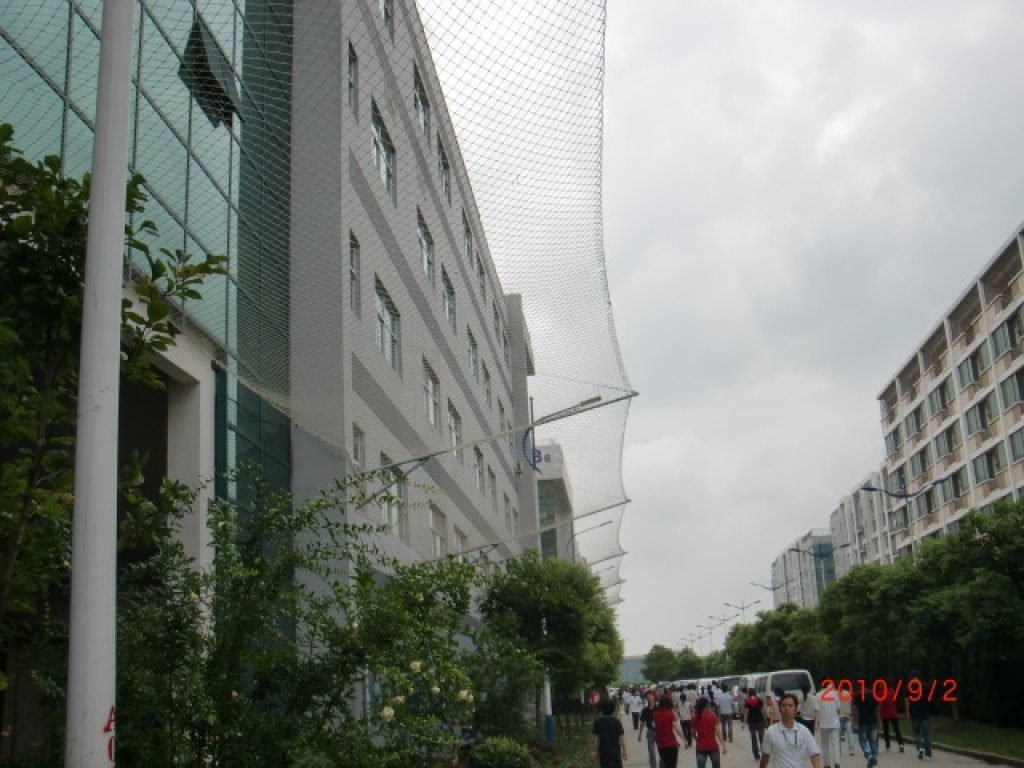
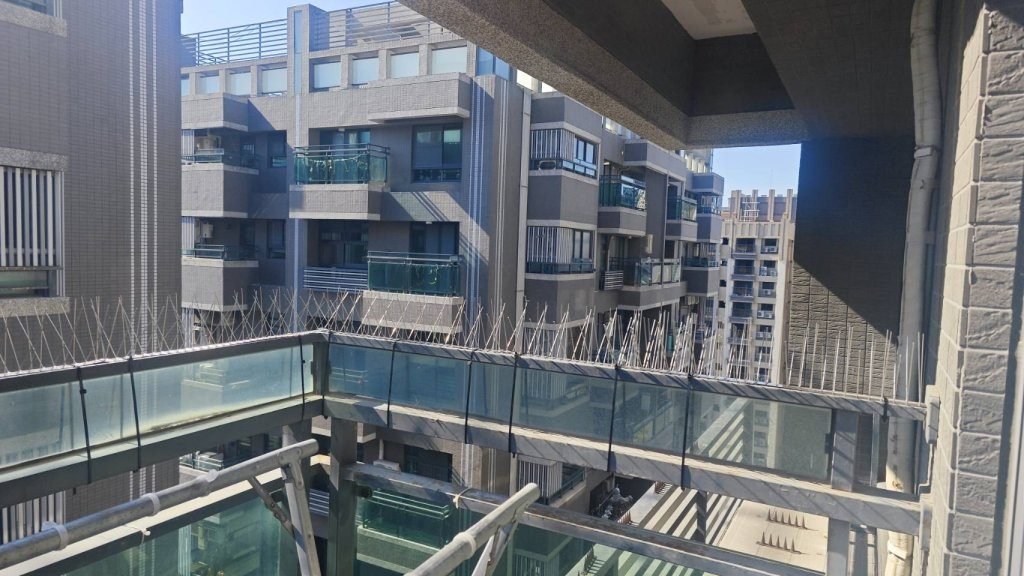
Bird netting is one of the most common and well-proven solutions in building bird control. It is not designed to harm birds: it simply stops them entering or perching in a defined area, without affecting the use or appearance of the building — a humane measure that keeps working long term.
Typical installation locations include:
- Plant roofs
- School corridors
- Community courtyards
- Building light wells
- Balconies
- Skylight canopies
- Rain hoods
- Air-conditioning platforms
- Stairwells
- Car parks
Material, twine diameter and mesh size are specified per environment, balancing safety, appearance and durability.
Public-health background in this article draws on Yahoo News / UDN coverage of the feral pigeon problem in Taiwan.